Your feet are the first thing to freeze 🥶
And once the feet go, the rest of the body isn’t far behind.
Surfing in the winter months is something special, provided you have the right equipment.
If you're reading this, you're likely gearing up to take advantage of fun, uncrowded cold water surf sessions here in the North.
A good pair of wetsuits boots are one of, if not the most, crucial piece of gear for any winter surfer.
In this comprehensive guide, we'll walk you through all the wetsuit boots we recommend, breaking down the pros and cons of each style. From the lightweight 3mm for those "balmy" fall days to the toasty 7mm for deep-winter dawn patrols, we've got you covered (literally).
So grab a hot beverage, settle in, and let's get ready to boot up for your next cold water session. Your toes will thank you!
What Thickness Do I Need? // We Recommend // Consider This // Sizing & Fit
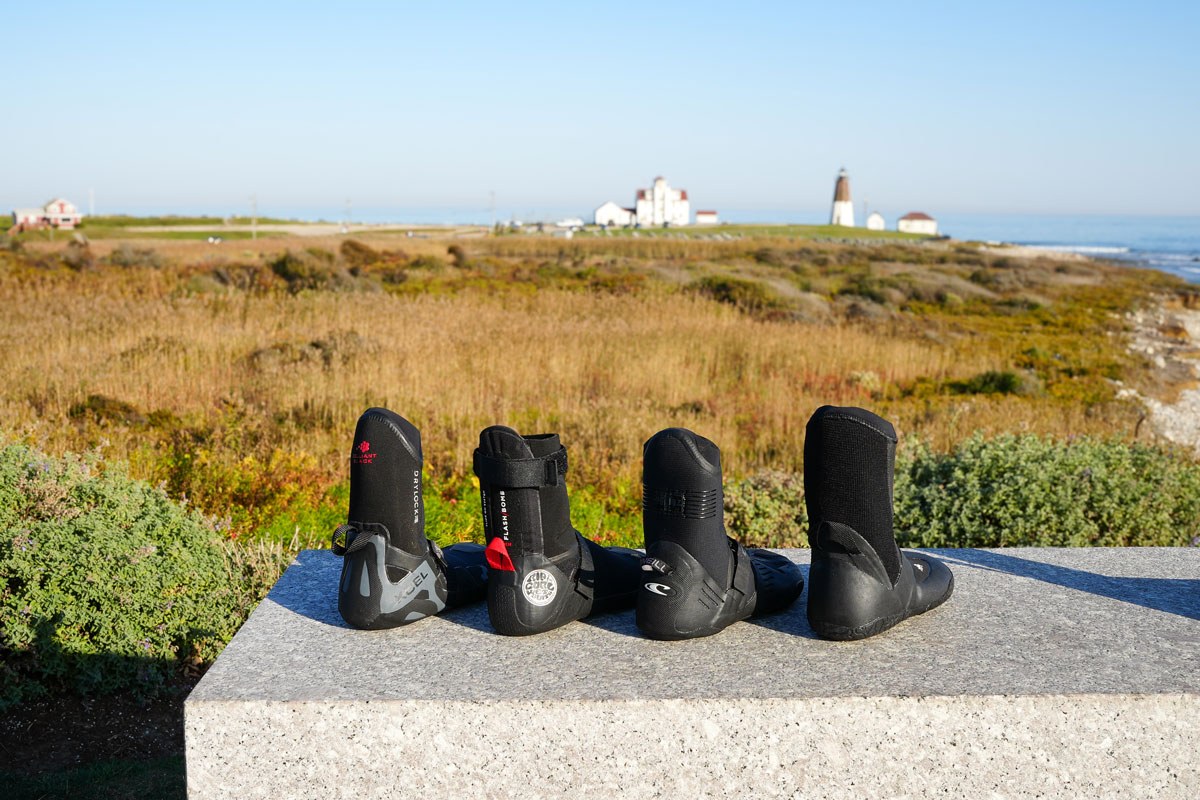
What Thickness Boots Do I Need?
3MM vs 5MM vs 7MM
Water temperature up here in the Northeast fluctuate like crazy!
Here’s what you'll need on your feet for each month of the year:
January: 5mm boots (7mm north of Mass
February - March: 7mm boots
April - May: 5mm boots
June: 3mm boots
October-November: 3mm boots
December: 5mm boots
If you can swing a pair of each thickness, you’ll be glad you did.
But for those of us on a budget and want to surf year round, here’s a pro tip:
Grab a pair of 3mm to wear from October thru mid-December, then switch over to 7mm for the rest of the winter.
If you can’t see yourself surfing in Jan/Feb/March, then you’re probably fine with just a single pair of 5mm.
Wetsuit Boots We Wear + Sell + Recommend
WE'VE TRIED THEM ALL!
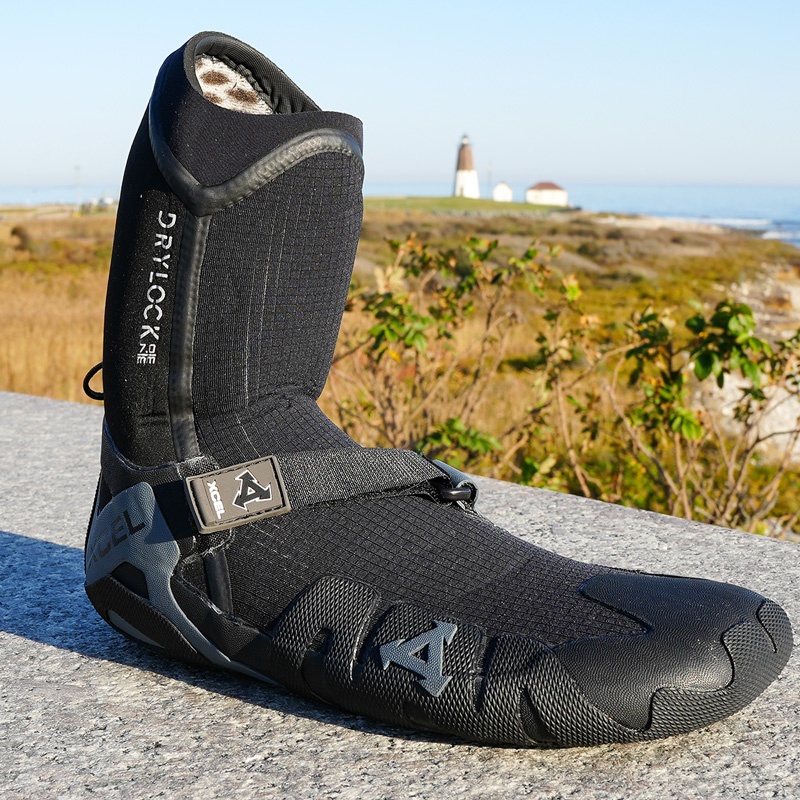
Xcel Drylock
AVAIL. 3MM, 5MM, 7MM
Pros: The drylock boots are cult classic here in the Northeast. Warm and rugged are the name of the game with this pair. Most rugged boot we sell (great if your daily spot is rocky)
Cons: Not the best board feel because of rugged sole.
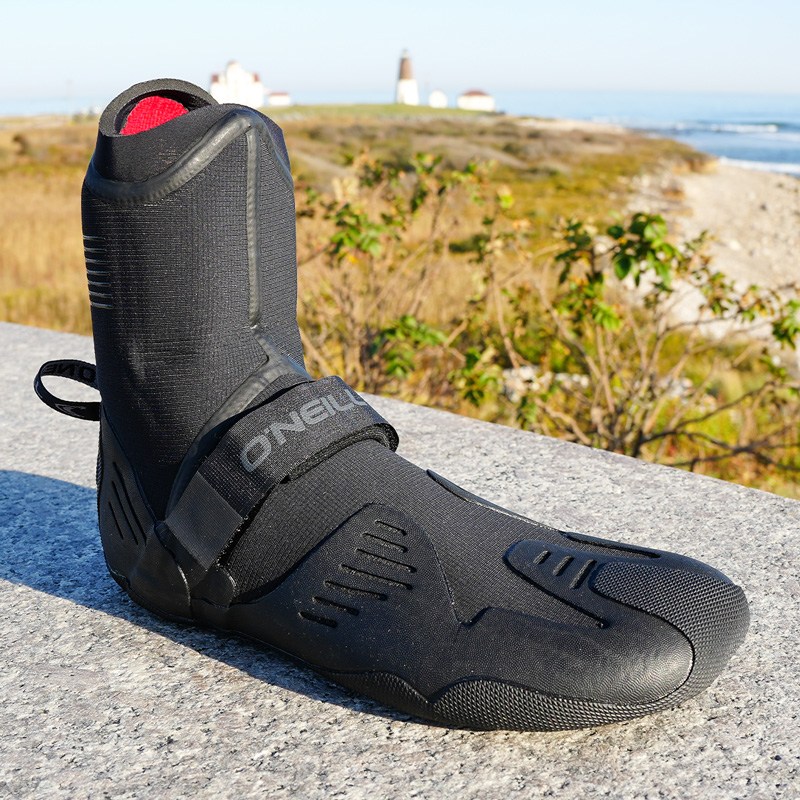
O'Neill Psychotech
AVAIL. 5MM, 7MM
Pros: Built with O’Neill’s next level Technobutter neoprene, the Psychotech boot is both toasty warm and super light in comparison to the others on this list. This boot also offers the best board feel compared to other 7mm boots.
Cons: Not as rugged on the bottom, so may need to replace in 2-3 seasons.
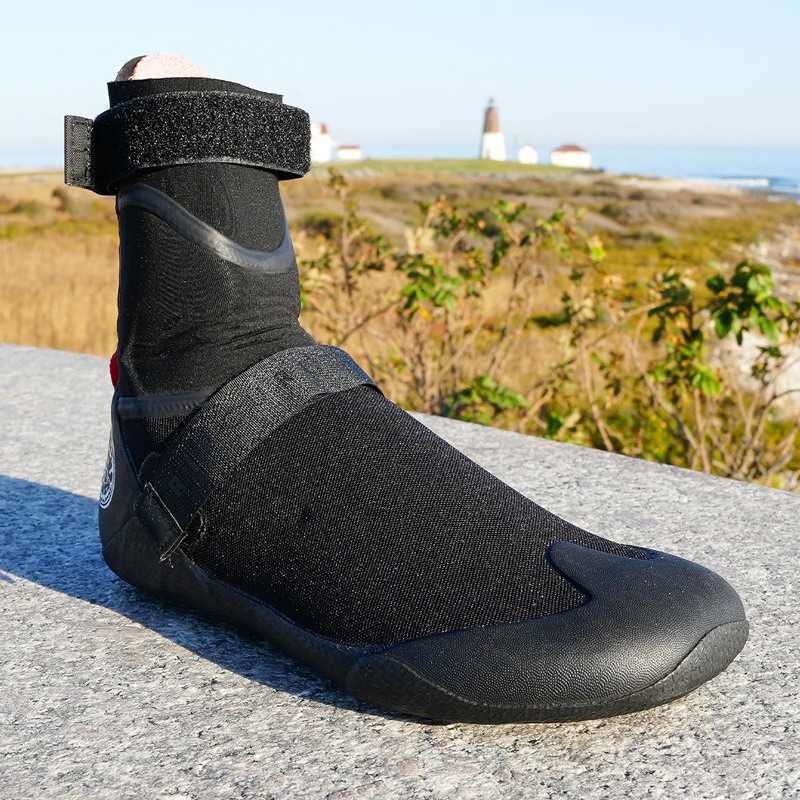
Rip Curl Flashbomb
AVAIL. 5MM, 7MM
Pros: Full flash lining throughout this boot = toasty warm and comfortable, plus quick to dry if you turn them inside out. Great if you hate that putting on cold wet boots.
Cons: Flash lining can get stinky if not rinsed every time
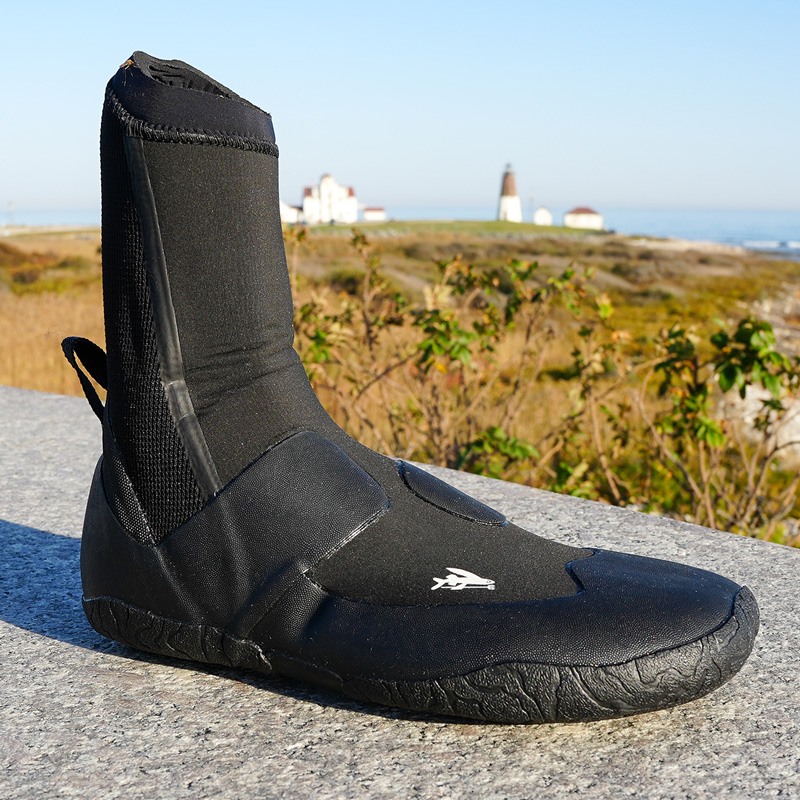
Patagonia R5
AVAIL. 7MM
Pros: The warmest and most eco-friendly boot we carry, built with Patagonia’s breakthrough Yulex construction. This boot is toasty and recently re-designed to have minimal seams. As with all Patagonia gear, the goal is a product that lasts.
Cons: A bit tougher to get on that the other options
Wetsuit Boots Sizing and Fit
KEEP 'EM SNUG!
We often get asked how a bootie should fit. The simple answer is, tight!
Toes up against the end (but not crammed). Tight around top of foot and ankle.
Any pocket of air or gap between your foot and the neoprene will most definitely fill with water. Excess water in your boot sloshing around is a session killer.
Tight is key - but also make sure they aren’t too tight. If you’re toes are curling a bit at the end, then you’ll be stubbing your toe when you go to pop up (or walk out on the rocks!). Too tight can also lead to poor circulation and cold feet.
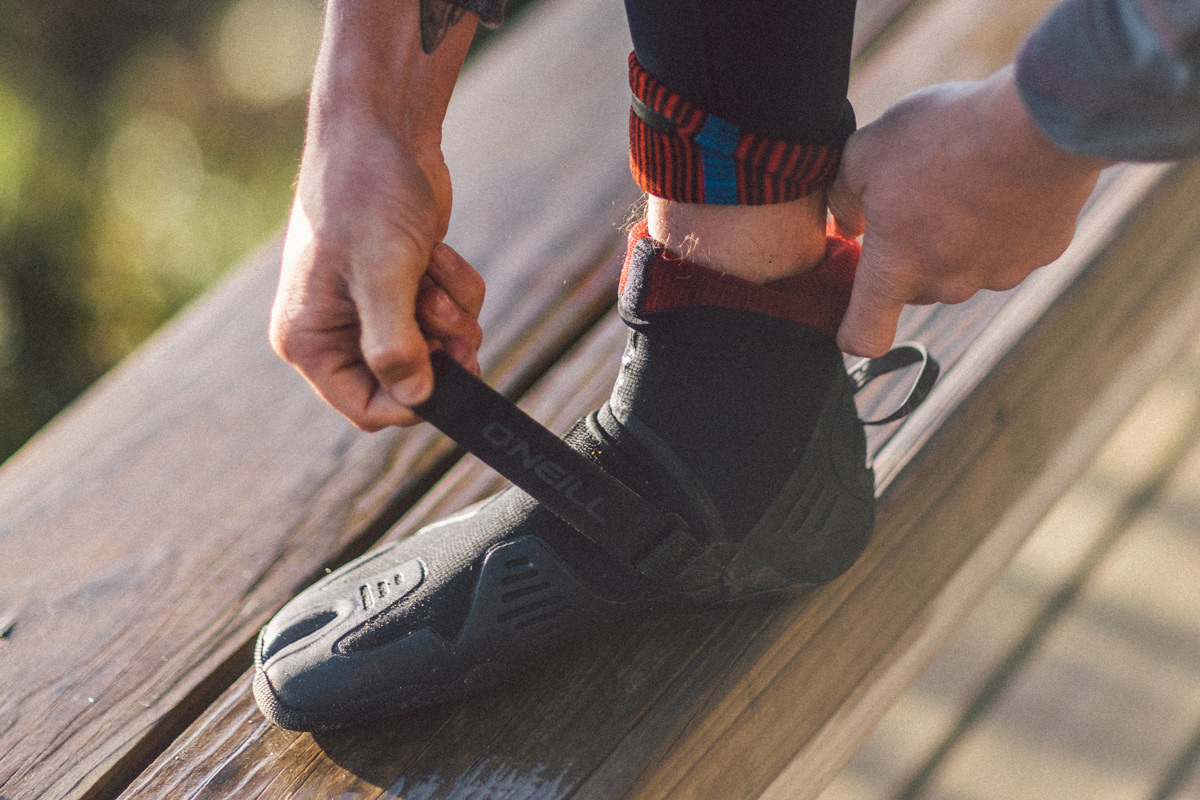
Wetsuit boots come in standard US men’s shoe sizing 5 thru 13. Some brands just started running 1/2 sizes as well as women’s sizes. That being said, we consider wetsuit boots unisex and typically order the “mens” styles down to the smallest size.
For women sizes - I’d recommend trying out a Mens size - 1 size down from your size. So, for example, if you’re a women’s shoe size 8, try a men’s size 7 bootie. We’ve noticed over the years that smaller sized booties run small and will usually work for smaller feet.
All brands also have a slightly different fit, so we always recommend trying a couple on until you find what fits you best!
Boots should always be tucked UNDER the leg of your wetsuit.
Wetsuit Boots - Things to Consider
EVERYONE'S DIFFERENT!
Of course, everyone’s on their own journey and have different circumstances. Here are some other things to consider when purchasing a pair of boots:
Where do you surf?
If you surf mostly beach breaks, you might not need the more rugged boots that protect your feet on the rocks. You might value a boot that is lighter weight for performance or warmer with a slightly heavier lining.
Year Round vs Tail Ends
Choosing the right thickness for your wetsuit boots depends on your tolerance to the cold, as well as if you’ll be surfing year round vs the tail ends of the season.
If you’ll only be surfing tail ends - one pair of boots might do the trick.
If you want to take advantage of surf no matter what time of year, you may need a pair of each thickness to get the most out of each swell.
Round vs Split Toe?
Most boots come with the option of Split vs Round Toe. Split toe separates the big toe from the others, like a flip flop. Round toe boots have them all together nice and snug.
Choosing one over the other may depend on the thickness you need, and whether you value board feel over warmth.
A split toe boot will allow you to grip the board better, but will not offer as much warmth as a round toe boot.
Caring For Your Wetsuit Boots
NO RINSE = NO BUENO!
Just like with your trusty wetsuit - the trick to extending the life of your boots is to rinse them after every session.
Doing this will help them last a bit longer and keep them from smelling like a Second Beach in Newport at low tide.
It’s ok to let them dry outside, but try not to leave them in direct sunlight for an extended period.
ALSO - For those that need to hear this - DON'T PUT YOUR WETSUIT BOOTS IN THE DRYER!
Quick 'n Dirty Rundown
LET'S CUT THROUGH IT
Of course all 7mm boots will likely be warm enough to get you through a cold winter. So, aside from warmth, here’s the real breakdown between the brands:
XCEL - Wicked rugged
O’NEILL - Lightweight, high performance
RIP CURL - Soft + comfy
PATAGONIA - Eco-friendly, best warranty
Our team here at Warm Winds are experts in coldwater gear. Any questions regarding boots, gloves, or wetsuits - don't hesitate to shoot us a message or give us a call!